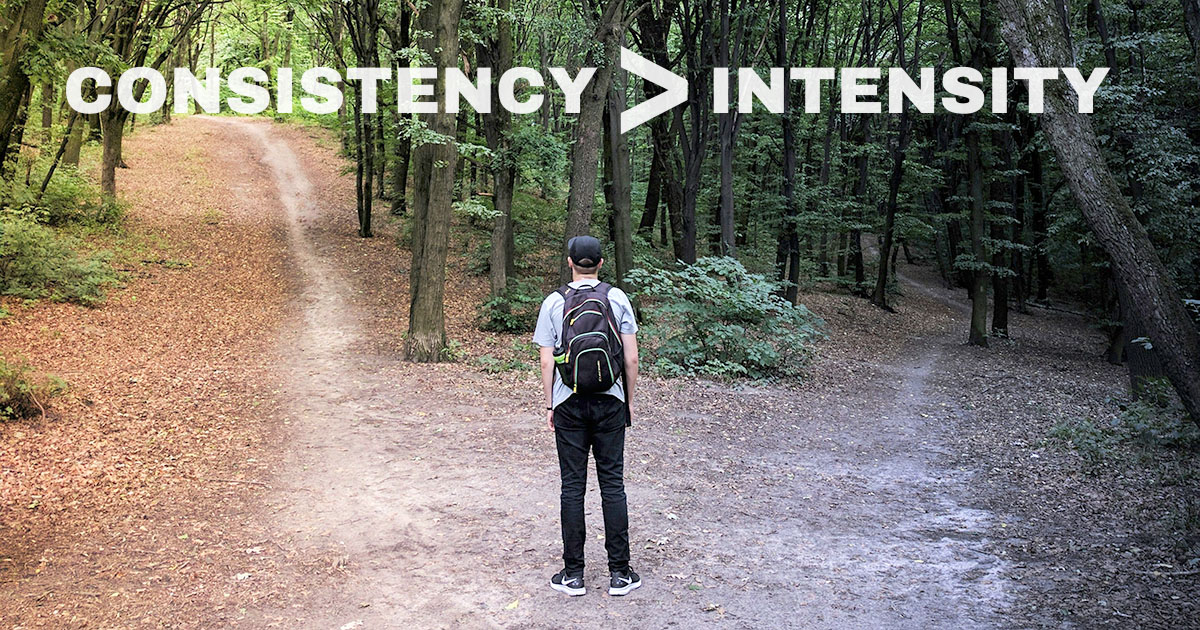
Most people think the key to reaching 10,000 steps a day is effort.
Walk longer. Push harder. Do more.
That works for a few days.
Then life gets busy — and everything falls apart.
The real key isn’t intensity.
It’s consistency.
And consistency only works when it’s protected.
Why Intensity Breaks Down
High-effort plans feel productive at first.
You go for long walks. You aim for big numbers. You try to “make up” for missed days.
But intensity creates fragile routines.
When your plan depends on:
- extra time
- high energy
- perfect conditions
…it becomes easy to skip.
And once you skip, it’s harder to restart.
This is why people often cycle between:
- very active days
- completely inactive days
Instead of building something steady.
What “Protecting Consistency” Actually Means
Protecting consistency means prioritizing:
👉 showing up over doing more
Instead of asking:
“How do I hit 10,000 steps every day?”
You ask:
“How do I keep walking, even on imperfect days?”
This shift removes pressure — and makes the habit sustainable.
Why Consistency Works Better Than Intensity
When it comes to consistency vs intensity, consistency wins over time.
Habit research consistently shows that repetition matters more than intensity when building long-term behavior.¹
Small, repeatable actions:
- require less effort
- create less resistance
- are easier to maintain
Over time, they compound.
That’s what turns walking into something automatic — not something you have to force.
What This Looks Like in Practice
Instead of relying on big days, you build reliable ones.
- A short walk still counts
- A low-step day still maintains momentum
- Missing perfection doesn’t mean starting over
This is where a flexible baseline becomes powerful:
👉 See Strategy 4: Use a Minimum Step Floor
It gives you a way to keep going — even when 10,000 steps isn’t realistic.
How to Protect Consistency
1. Lower the barrier on hard days
Your system should work when:
- you’re busy
- you’re tired
- your schedule is unpredictable
If it only works on “good days,” it won’t last.
2. Build walking into your day
The easier it is to start, the more likely you are to follow through.
That’s why strategies like:
make such a big difference.
They reduce the effort required to stay consistent.
3. Stop trying to “make up” for missed days
Trying to compensate with extra steps often leads to burnout.
Consistency doesn’t come from catching up.
It comes from continuing.
4. Measure progress over time, not daily perfection
A single day doesn’t define your progress.
What matters is:
👉 how often you keep showing up
Over weeks and months, consistency beats occasional intensity every time.
While intensity ebbs and flows, consistency quietly compounds over time — day after day, walk after walk.
The Hidden Benefit of This Approach
When consistency is protected:
- walking feels easier to start every day
- missed days don’t feel like failure
- motivation becomes less important
And something important happens:
👉 you stop thinking about walking as a task
👉 and start experiencing it as part of your day
How This Fits Into the Bigger System
Consistency isn’t one strategy — it’s the core ingredient that makes all of them work.
If you’re new to this approach, start with:
👉 See The Ultimate Guide to 10,000 Steps a Day
It explains how these strategies fit together into a system you can actually maintain.
Over time, this is what turns walking from something you plan into something that just happens.
Consistency will be the glue that holds it all together.
Final Takeaway
In the matchup between consistency vs intensity, consistency wins every time.
You don’t need more intense days to reach 10,000 steps.
You need fewer breaks in the pattern.
When consistency is protected, progress takes care of itself.
Citations
1 Lally et al., European Journal of Social Psychology (2010)